
December 3: International Day of Persons with Disabilities
Accessibility Matters – Building Confidence, Independence, and Inclusion
International Day of Persons with Disabilities on December 3 is an important reminder of why accessibility matters in interior design and the regulation of the profession. Across Ontario, we know our members lead essential work in creating spaces that support safety, independence, and dignity for people of all ages and abilities. Their expertise shapes the profession every day.
At ARIDO, this commitment inspires our own responsibility to improve how people engage with the association. Over the past few months, ARIDO has been updating our website to enhance accessibility for people who use assistive technologies or navigate online in different ways. These improvements include full keyboard navigation; clearer focus indicators for low-vision users; the removal of entry animations for reduced-motion settings; controllable carousels; higher contrast between text and background; improved heading hierarchy for screen readers; alternative text on images; descriptive link language; and improved controls for interactive elements. These changes help more people access interior design information in the way that works best for them. See a few examples in screenshots below.
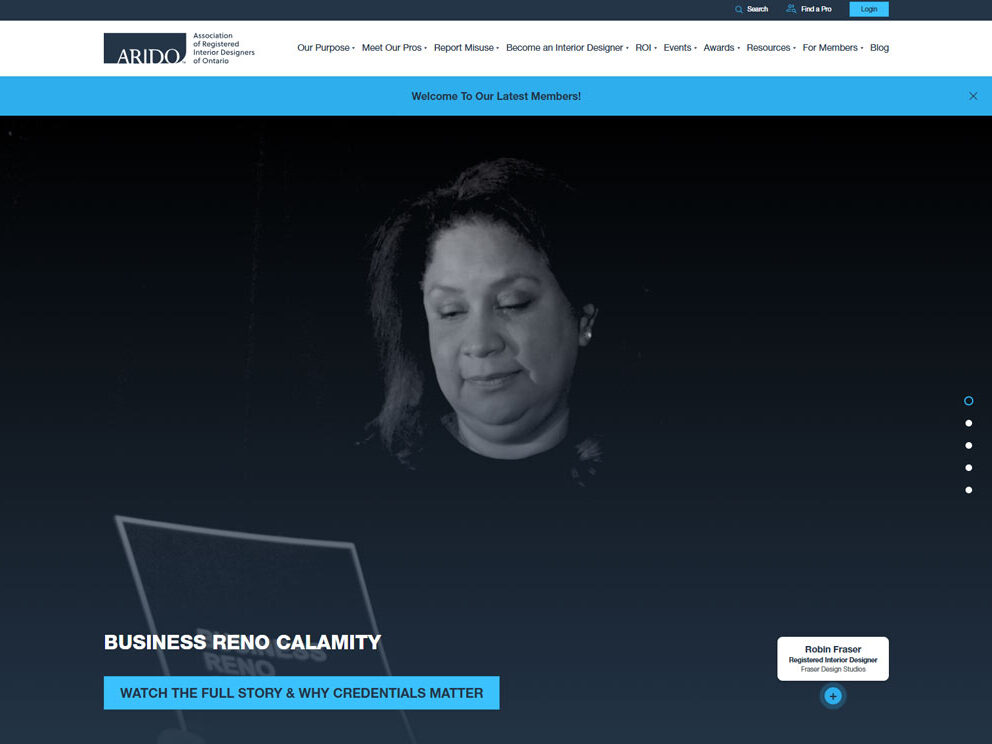
Higher colour contrast on buttons and text
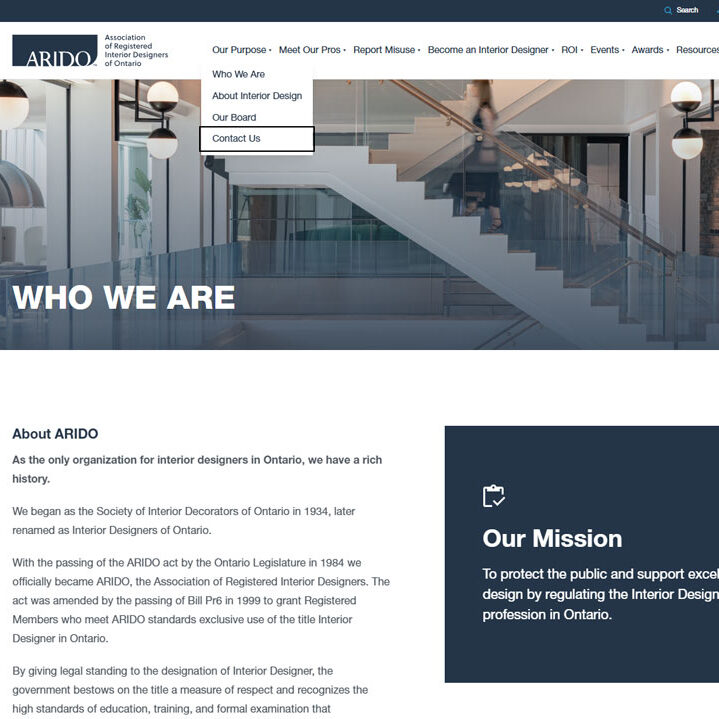
Focus indicators on main menu
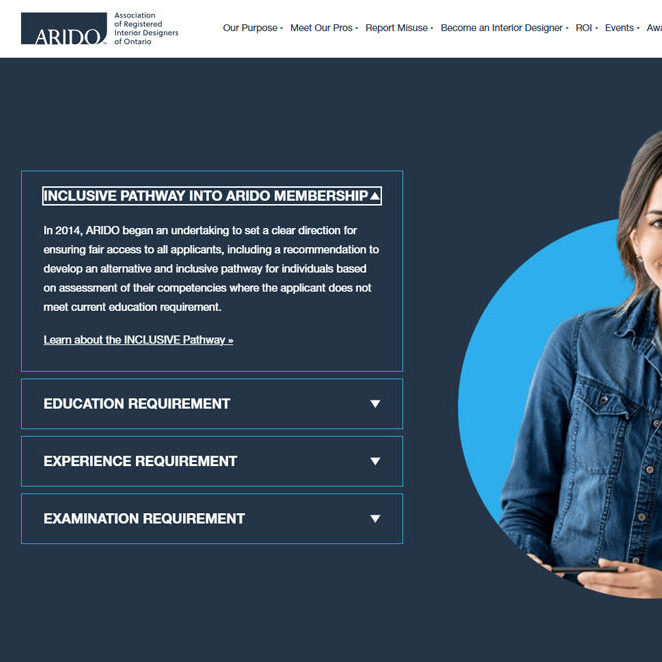
Focus indicators and contrast between text and background
We continue to learn from the interior designers who lead accessibility and Universal Design work across the province.
We approached ARIDO Registered member Brenda Bjarnason to share how Universal Design informs her work across workplaces, public buildings, homes, and seniors’ communities. In her practice, Universal Design is not an afterthought but a framework that shapes the earliest conceptual decisions. Brenda emphasized the importance of multi-sensory wayfinding, intuitive circulation patterns, lighting that supports aging eyes, finishes that reduce visual confusion, and space planning that anticipates varied mobility levels. These strategies go beyond “meeting requirements”; they create environments that support independence, reduce cognitive and physical strain, and allow people to move through spaces with confidence and dignity.
Barrier free, inclusive spaces designed by Registered Interior Designer Brenda Bjarnason
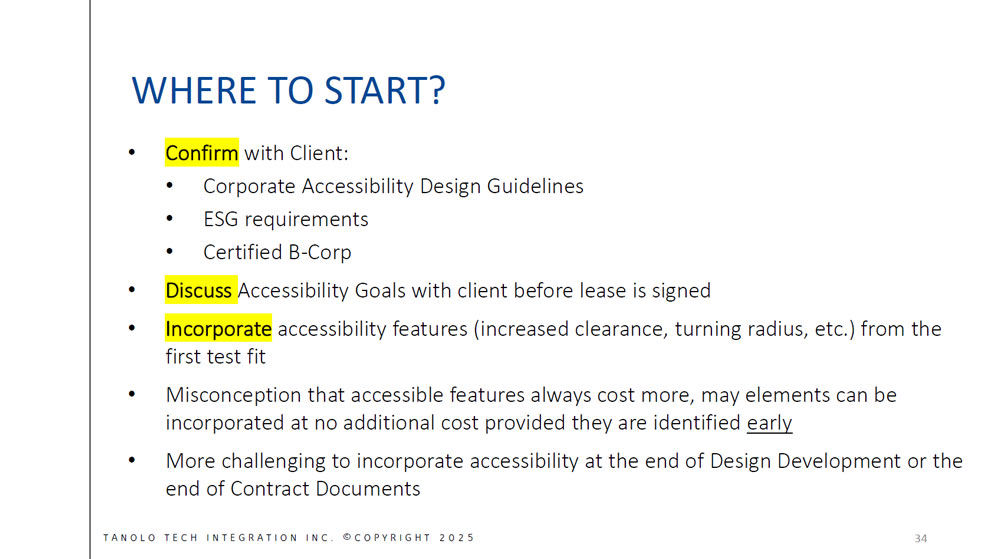
We also thank ARIDO Registered member Vanessa Tantalo, who teamed up with ARIDO earlier this year to deliver a webinar for members on accessibility requirements in Ontario, the Accessibility Canada Act, RHFAC, CMHC guidelines, and the ways designers can help clients exceed minimum standards. Her session emphasized the many forms disability can take, including non-visible disabilities, and highlighted the essential role designers play in shaping environments where everyone can feel welcome.
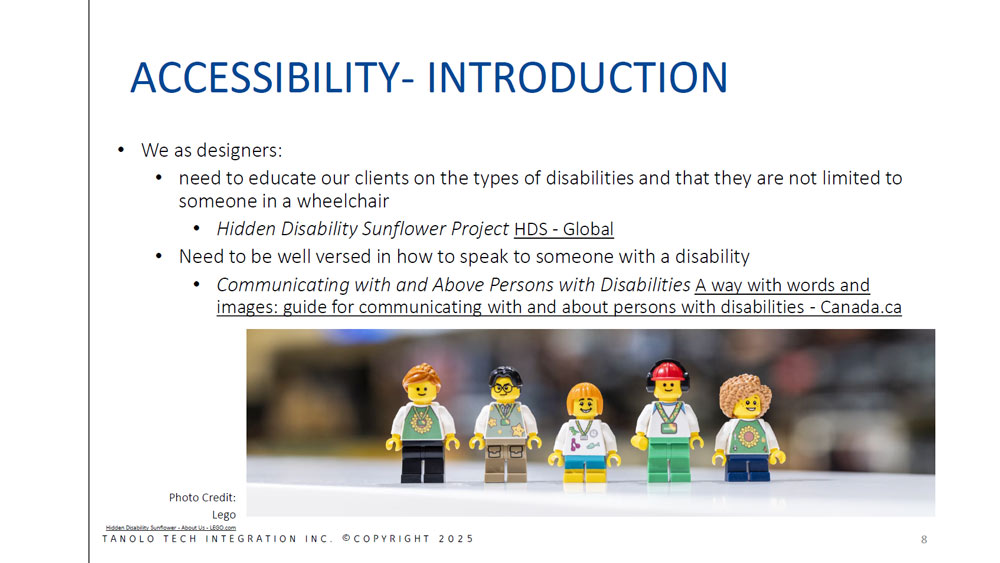
“Accessibility Requirements in Ontario and Going Beyond” presentation slides courtesy of Tanolo Tech Integration Inc.
The knowledge, leadership, and lived experience of Registered Interior Designers continue to set the standard for accessible design in Ontario. Their work strengthens our profession, informs our direction, and inspires the steps ARIDO is taking to better support and serve its community.
Furthermore, ARIDO’s Accessibility Committee, a sub-committee of the Practice Advisory Committee, continues to develop new resources and practice guidance that will help members exceed minimum accessibility standards. We look forward to sharing more as this work progresses through 2026.
Together, these efforts reflect a profession committed to designing environments where everyone can participate fully.
Because accessibility matters.


